
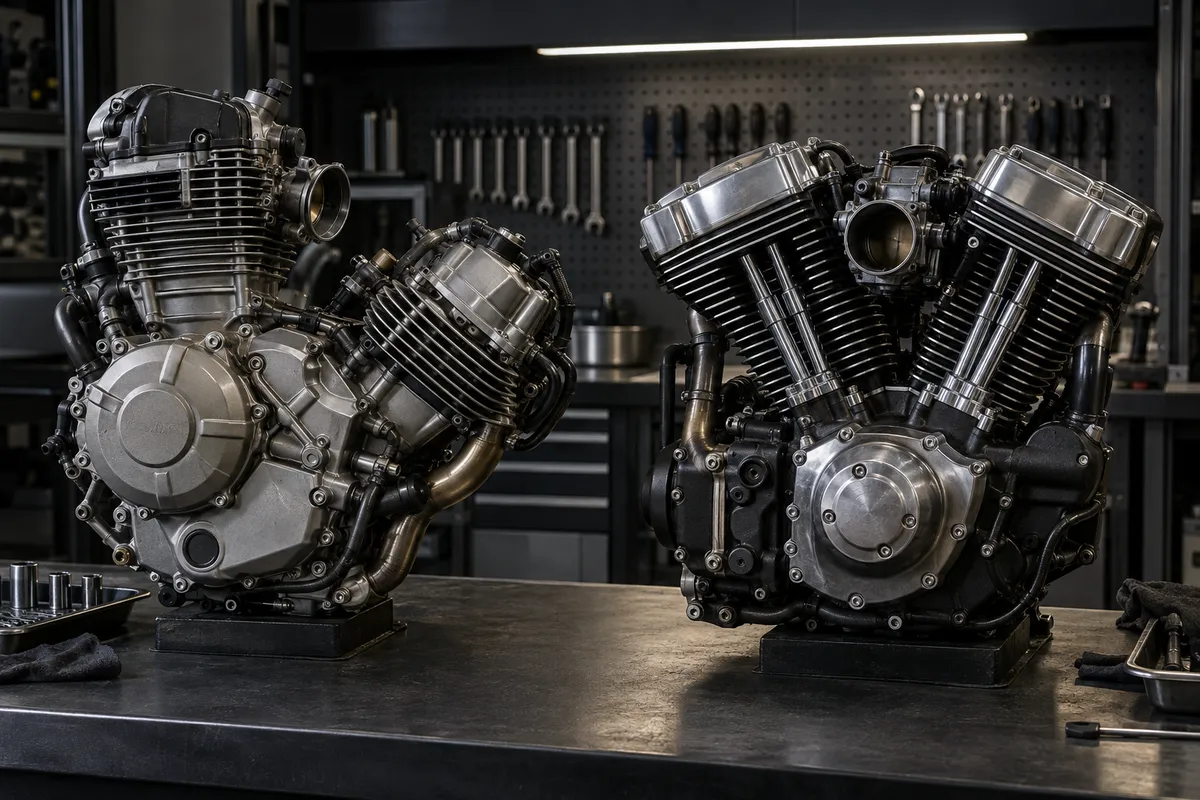
Two bikes can list similar horsepower and still feel nothing alike. A big reason is how the cylinders are arranged. By the end of this piece, you'll understand what sets Ducati's L-twin apart from other V-twins, and how to read an engine layout as a clue to a bike's personality.
The explainer comes from Slashgear, which looked at how Ducati's L-twin differs from other V-twin motorcycle engines. Its core argument: a 90-degree layout brings real performance and handling benefits, with airflow and heat management as the main drawback. I'll stick to those points and add my own read where I flag it.
What an L-Twin Actually Is
An L-twin is a V-twin with a specific geometry: the two cylinders sit 90 degrees apart. Look at the engine from the side and the cylinders form an "L" rather than a narrow "V." Ducati's version is the one most riders think of, and per Slashgear it remains culturally iconic because it shaped the brand's performance identity and riding character.
So "L-twin" is not a different species of engine. It is a V-twin with a particular angle, and that angle is what drives the differences below.
Why 90 Degrees Matters: Balance and Narrow Profile
According to Slashgear, the 90-degree layout delivers two headline benefits: a narrow profile and good balance.
A twin with only two cylinders is slim by nature, so the engine doesn't force the frame to spread wide around it. That matters at the places you notice it: how the bike fits between your knees, and how it behaves when you tip it over.
Balance is the other half. The 90-degree arrangement is described as a naturally well-balanced design, which is part of why the layout is associated with strong performance and handling.
How Layout Changes Cornering
Here is the practical takeaway for anyone comparing sport bikes. Engine shape and width affect how a motorcycle handles, not just how much power it makes. A compact, balanced engine is easier to package in a sporty chassis, and Slashgear ties the L-twin's layout directly to its handling benefits.
My own analysis: when you test ride, pay attention to how the bike turns in and how it feels at lean, not only how it pulls on a straight. Layout is one of the reasons two similarly powered bikes can feel so different.
The Sound and Feel of Uneven Firing
The L-twin also has a distinctive firing rhythm. Its firing intervals are uneven, which gives the engine a recognizable pulse instead of a smooth, evenly spaced hum. That is why you can often identify a Ducati by ear before you see it.
This is the "engine personality" part of the story. Firing order shapes the sound and the way power arrives, so it's worth listening for when you compare bikes in person.
L-Twin vs. Harley-Style V-Twin
The comparison most riders reach for is Ducati against the cruiser-style V-twin. Both are two-cylinder V layouts, but the geometry and the character differ. Slashgear frames the L-twin as the performance-and-handling take on the idea: narrow, balanced, and tuned toward sport riding. Cruiser V-twins serve a different riding style and have their own feel.
The point isn't that one is better. They are built around different priorities, and cylinder layout is a big part of why.
The Trade-Off: Heat and Airflow
No layout is free. Slashgear identifies airflow and heat management as the L-twin's main drawback. With the cylinders arranged this way, getting cool air across both of them is harder, and the piece points to a cooling problem in early L-twins.
If you're shopping used and looking at an older L-twin, that is a fair thing to ask about. I'd research the specific model's cooling history and how it's been maintained, since the source describes the issue in general terms rather than by model.
How to Use This When Comparing Bikes
- Check the cylinder arrangement, not just the displacement and horsepower figures.
- Listen to the exhaust note: uneven firing is part of the character.
- Notice how narrow the bike feels between your legs and how it turns in.
- On older designs, ask how heat is managed, especially in traffic.
The Takeaway
Next time you read a spec sheet, look past the horsepower number and find the cylinder layout. It tells you more about how the bike will sound, steer, and run hot than the headline figure ever will.


