Engine overheating can lead to catastrophic failures, costing you time and money in repairs. One of the key components in preventing this disaster is the water jacket in engine blocks. Let’s explore what water jackets are and their crucial role in keeping your engine cool.
What Are Water Jackets?
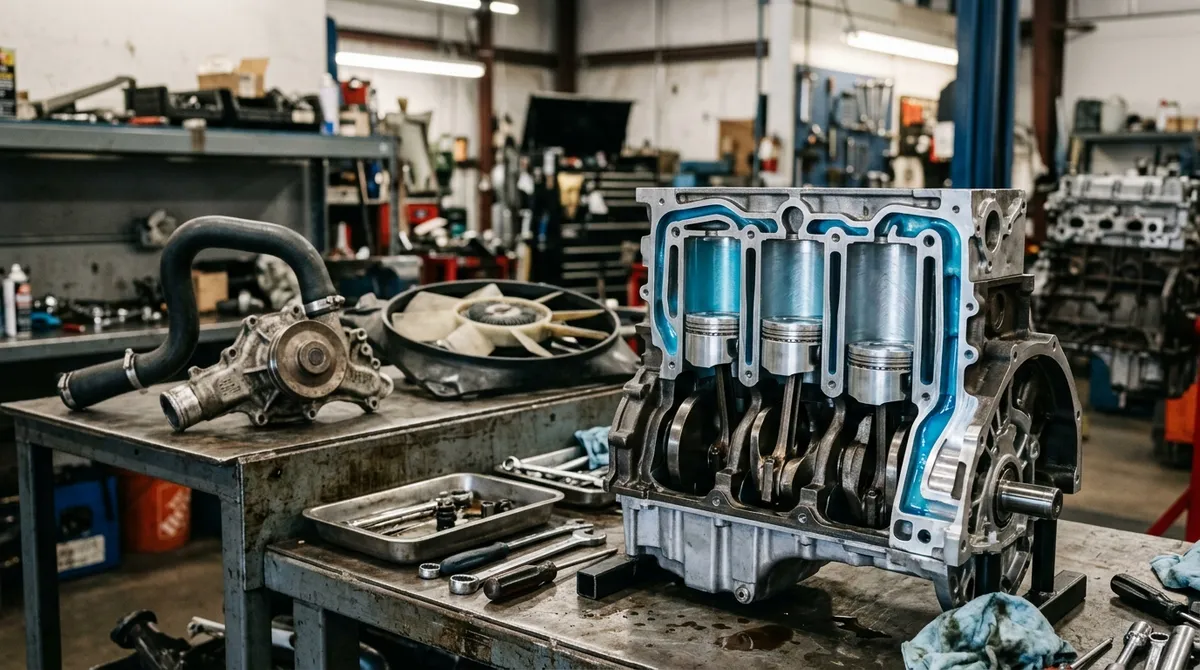
Water jackets are integral parts of an engine block designed to house coolant passages. These passages allow coolant to circulate around the hottest areas of the engine, effectively managing temperatures during operation. When the engine runs, it generates immense heat, particularly in the combustion chamber, cylinder head, and cylinder walls. Without proper cooling, these areas can overheat, damaging components like pistons and head gaskets.
How Do Water Jackets Work?
Water jackets work as part of a wider engine cooling system. This system includes the water pump, radiator, fans, belts, and hoses. The process begins when coolant is drawn from the radiator, entering the engine block through the water jackets.
Coolant Circulation Process
- Entering the Engine: Coolant enters the engine through ports located around the water jackets.
- Cooling Hot Areas: As the engine runs, the coolant absorbs heat from the nearby engine components and circulates through the water jackets.
- Returning to the Radiator: After collecting heat, the warmed coolant exits the engine and travels back to the radiator to release this heat into the air, cooling it down for reuse.
This loop continues as long as the engine is running, keeping temperatures within safe limits.
Importance of a Functional Cooling System
Understanding the cooling system's function is essential for vehicle owners, especially as more drivers take on DIY maintenance. Recognizing the signs of potential overheating—such as steam from under the hood or an unusual rise in temperature gauge readings—can help avoid severe damage to engine components.
Risks of Overheating
If the cooling system fails, the entire engine can suffer:
- Pistons can warp, leading to decreased performance and efficiency.
- Engine Blocks may crack, resulting in oil leaks and significant repair costs.
- Head Gaskets can blow, causing coolant and oil to mix, leading to an expensive engine rebuild.
Connection to the Shift Toward EVs
As the automotive industry shifts to electric vehicles (EVs), the traditional internal combustion engine (ICE) is still widely used. The more you understand how your ICE operates, the better prepared you'll be for the changes in technology and design that will accompany the rise of EVs. Knowledge of engine cooling systems will remain a valuable asset, allowing you to compare them intelligently with the new EV frameworks.
Conclusion
Water jackets are vital components that manage heat in an engine, preventing costly overheating problems. Recognizing their role in the cooling system can empower you to perform better maintenance and catch potential issues early. As automotive technology evolves, understanding the mechanics of combustion engines helps you appreciate the complexities of both traditional and upcoming designs.